A seller lists a fully renovated frond villa. The photographs are clean, the price is right, and an offer lands inside the first month. Then the file moves to transfer, and it stalls. Not over financing. Not over inspection. Over a rooftop deck the previous owner added years back, a facade color chosen before the current guidelines existed, or a pergola nobody thought to document because it looked like every other pergola on the frond.
This is the part of a Palm Jumeirah sale that rarely makes it into a listing conversation, and it is the part that actually decides whether a deal closes on schedule. Price gets negotiated. Buyers get qualified. What stops a transaction cold is a compliance history the seller didn't know they were carrying.
The checkpoint that isn't on the closing checklist
Every ready home built by Nakheel, and that includes every villa on Palm Jumeirah, requires a No Objection Certificate before the Dubai Land Department will process the transfer. Sellers apply for it through Nakheel's own owner services, and it functions less like paperwork and more like an audit. Nakheel checks the property against its own records of approved modifications before it signs off, and if something was built, extended, or repainted without an approved NOC on file, that gap surfaces at exactly the moment a buyer is ready to close.
This is not a formality that a broker can smooth over with a phone call. An unauthorized modification blocks both the DLD transfer and any bank valuation tied to the buyer's financing, because both processes check compliance status independently of who is representing either side. A villa can be fully renovated, beautifully staged, and under contract at full asking price, and still sit in limbo for weeks while the seller scrambles to regularize work that was completed years earlier.
Why the Palm answers to a different authority
Most Dubai villa renovations run through a single authority, Dubai Municipality, using a standard building permit process. Palm Jumeirah does not work that way. The island sits under Trakhees jurisdiction rather than Dubai Municipality, which means every structural or exterior change needs two separate approvals moving in parallel: a Nakheel NOC confirming the work matches community design guidelines, and a Trakhees CED permit confirming it meets building code. Drawings prepared in the standard Dubai Municipality format are not accepted by Trakhees, which is one reason renovation timelines on the Palm run longer than comparable projects inland.
The island has one more requirement that exists nowhere else in Dubai. Palm Jumeirah is built on reclaimed land with variable soil bearing capacity, so any extension or foundation work within three meters of a plot boundary requires a geotechnical investigation report before Trakhees will approve it. That report typically costs between AED 5,000 and AED 15,000 and takes seven to fourteen working days. Skip it, and the boundary work itself becomes a compliance flag regardless of how well it was built.
What changed in January 2026
Here is the detail that catches sellers off guard even when they believe their paperwork is in order. Nakheel updated its Palm Jumeirah design guidelines in January 2026, and the changes apply retroactively in practice, even though they weren't written to be retroactive in name. Above-parapet structures, including pergolas, raised roof terrace elements, and mechanical additions, are now restricted across all frond villas with no grandfathering for work approved under older guidelines. Rooftop terrace finishes must come from the 2026 approved material palette, which means decking materials that cleared approval in 2024 or 2025, including some timber and composite products, are no longer on the accepted list. Exterior paint is tighter too. Custom colors are no longer accepted anywhere on the Palm, only the shades listed in the 2026 reference codes.
A renovation completed two years ago under the guidelines that existed at the time can be entirely out of step with the guidelines Nakheel checks against today. The seller did nothing wrong when the work was done. That does not change what shows up when the NOC application goes in.
A compliant renovation from 2024 is not the same thing as a compliant villa in 2026. Nakheel checks the property against today's guidelines, not the ones that applied when the work was approved.
What Nakheel is actually looking for
Not every improvement triggers a review. Internal cosmetic work, new flooring, interior paint, non-structural partition changes, generally clears without a Nakheel NOC. What draws scrutiny is anything visible from the street or the water, and anything that touches the shoreline or a shared boundary. That includes:
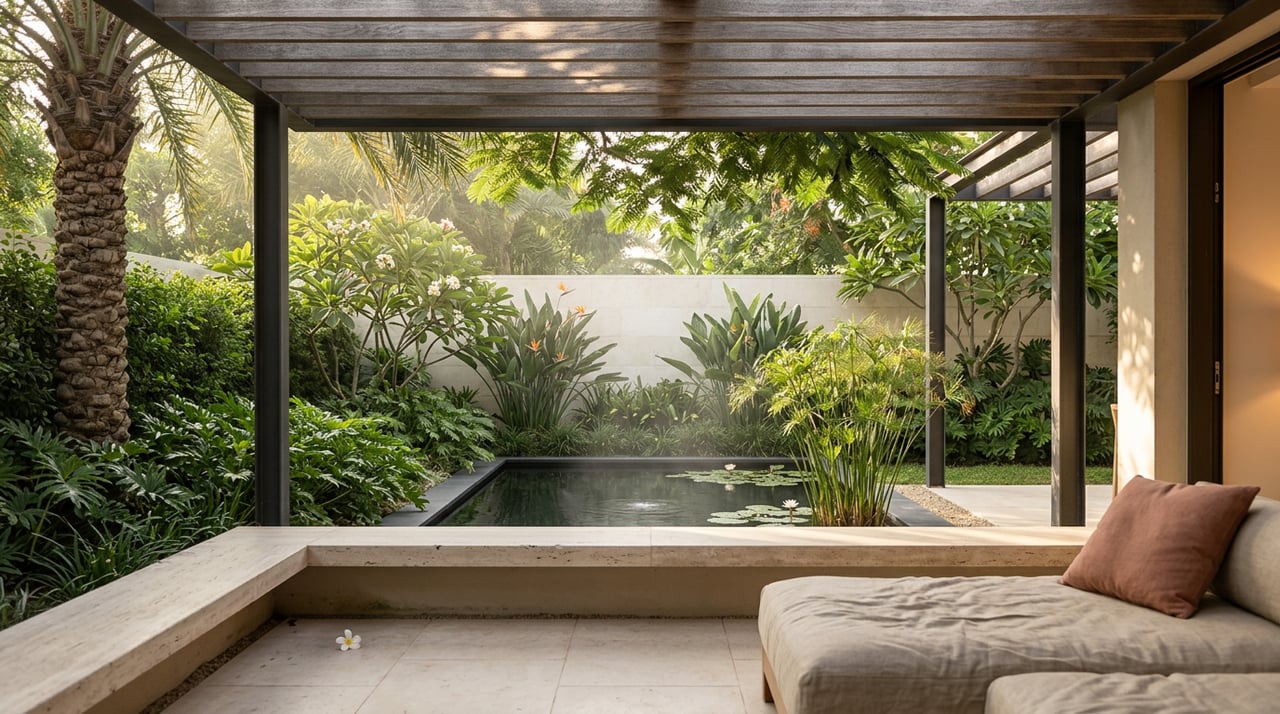
- Pergolas, outdoor kitchens, and hardscaping added to a garden or terrace
- Boundary wall changes or new pools
- Balcony cladding or facade changes on apartment-style units along the Trunk
- Any structure that extends toward the beach, since Nakheel does not permit private platforms or piers along the shoreline
- Extensions or raised structures that could block a neighbor's sea view, which can require a separate neighbor NOC before Nakheel will approve the file
The common thread is visibility and shared impact. A change that only the owner will ever see rarely needs sign-off. A change the next-door villa or the water channel can see almost always does.
The cost of finding out early versus finding out in escrow
The math on this is not close. Confirming compliance before a villa goes on the market costs a fraction of what it costs to discover a gap once a buyer is under contract.
| Before listing | During an active transaction | |
|---|---|---|
| Timeline | One to three weeks to confirm status through Nakheel's resale NOC process, four to eight weeks if a retroactive NOC and Trakhees permit are required | Sale paused until resolved |
| Nakheel deposit | AED 5,000 to AED 20,000, refundable | Same deposit, plus regularization costs |
| Penalty exposure | None if resolved proactively | AED 5,000 first-offense fine, plus AED 500 to AED 2,000 per day while the violation remains open |
| Total cost if regularized late | Not applicable | Original fine plus a 20 percent surcharge plus drawing and inspection fees, typically three to five times the cost of the original permit |
A security deposit forfeiture and a blocked future NOC application are the other two consequences worth naming. Once a violation is recorded against a property, Nakheel will not process new NOC requests, including a resale certificate, until it is cleared. That is the mechanism that stops a closing, not a slow negotiation or a difficult buyer.
What this means before you list
Renovation adds real value on the Palm. Open-plan layouts with floor-to-ceiling glass connecting living space to a pool deck have commanded 15 to 20 percent higher resale prices in waterfront communities, which is exactly why so many owners have updated original 2000s-era villas over the past several years. The value is genuine. It just needs a paper trail to survive the sale.
Before a villa goes to market, it is worth pulling the full modification history: every pergola, every repaint, every boundary or pool project, and checking each against a current Nakheel NOC on file. Unauthorized work appears in title deed searches and will be found during any future permit inspection, so there is no version of this where it stays hidden. The only question is whether it gets resolved on the seller's timeline or on the buyer's.
Common questions
Does a cosmetic renovation need Nakheel sign-off before I list? Generally no. Flooring, interior paint, and non-structural interior work typically clear without a Nakheel NOC. Anything visible from outside the villa, including exterior paint color, does need approval.
My villa was renovated years ago and passed without issue. Why would this matter now? Because Nakheel checks against its current guidelines at the point of resale, not the guidelines in place when the work was done. The January 2026 update to paint codes, rooftop materials, and above-parapet structures means older approvals can fall out of compliance without the owner changing anything.
Who typically handles the NOC application, buyer or seller? It runs through Nakheel's owner services and is applied for as part of the resale process before trustee transfer at the Dubai Land Department. It is the seller's compliance history being checked, so it is the seller's responsibility to have it in order before a buyer is under contract.
A villa on the Palm can be priced correctly, staged well, and still lose weeks to a compliance gap that has nothing to do with the buyer. Knowing that history before you list, not after an offer arrives, is the difference between a clean transfer and a stalled one.
If you're preparing to bring a Palm Jumeirah property to market, or evaluating one to buy, Leigh Williamson works through exactly this kind of due diligence as part of every mandate. Let's Connect.